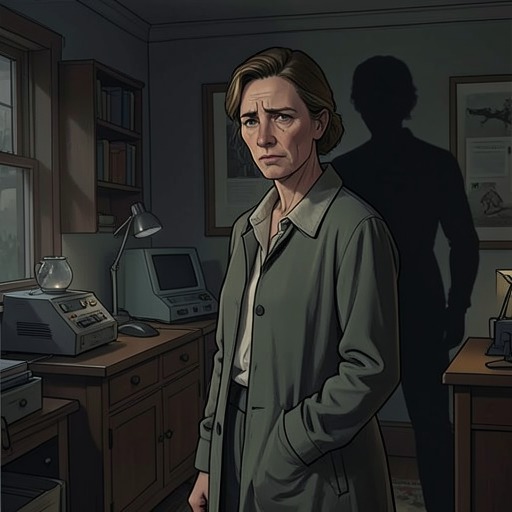
Colleen Janiece Barrow Birdsong's will
The RainmakerColleen Janiece Barrow Birdsong's will is the document that turns Rudy Baylor’s first client conference into a collision between legal inexperience, wealth, and family grievance. Its original provisions seem straightforward, but its thin form and enormous bequests make it a warning that the apparent simplicity of a will can conceal both serious planning problems and a volatile struggle over who deserves an inheritance.
The original document and its provisions
Miss Birdie Birdsong brings the will to Rudy during a legal-advice visit at Cypress Gardens Senior Citizens Center. She approaches him privately, handing over an envelope as the other student lawyers attend to their clients. The document is headed the Last Will and Testament of Colleen Janiece Barrow Birdsong. It is typed and official in appearance, but the envelope gives no indication of who prepared it. Miss Birdie says her former lawyer drafted it; that lawyer died of cancer the previous year, and the will itself is almost two years old.
The early provisions direct the executor to give each of Miss Birdie’s two children two million dollars and place one million dollars in trust for each grandchild. Rudy counts eight grandchildren, putting those family bequests at no less than twelve million dollars. The next major provision leaves three million dollars to a church and two million to a college. A list of charities follows, from the Diabetes Association to the Memphis Zoo, with at least fifty thousand dollars assigned to each. Adding the legacies quickly, Rudy estimates that Miss Birdie’s net worth is at least twenty million dollars.
That scale is at odds with the document’s modest physical form. Rudy has studied wills and estates, and he believes an estate of this size calls for a much more elaborate instrument, with trusts and other devices that a simple will does not provide. He worries that the document has not been designed to address the tax consequences of Miss Birdie’s wealth. Its plainness is therefore not merely a matter of style: for Rudy, it signals that the estate has not received the legal attention its value demands. He privately judges the deceased lawyer’s work to be malpractice, although the evidence establishes Rudy’s assessment, not a court’s finding.
The proposed change and its beneficiaries
Miss Birdie’s reason for seeking Rudy’s help is not to improve the existing gifts for her family but to reverse them. She says she is angry with her heirs and wants both children and some grandchildren excluded entirely. When Rudy asks whom she wants to protect, she gives him a handwritten list of four grandchildren whom she believes still love her and directs that each receive one million dollars. The others, she says, should receive nothing. She likewise insists that neither of her children should inherit. Her conversation makes the proposed will an instrument of exclusion as much as distribution: the money is to mark a division between those she feels have remained attached to her and those she believes have neglected her.
The new plan assigns the rest of the estate to Reverend Kenneth Chandler. Miss Birdie describes him as a television evangelist whose ministries build homes, feed babies, and teach the Bible. Her account also reveals that Chandler contacted her after she mentioned in a pledge note that she might revise her will and leave money to his ministries. He asked how much she was considering giving and continued calling; he even offered to fly to see her in his own Learjet. Rudy hears the proposed bequest against that sequence of attention and solicitation. The will’s intended principal beneficiary is therefore not simply a charity chosen at a distance: Miss Birdie’s personal admiration for Chandler and his active interest in her possible gift are both part of the circumstances surrounding the decision.
Miss Birdie is emphatic about the four million dollars for the selected grandchildren and the exclusion of the rest, but she does not present a settled explanation for every choice. She will not initially discuss the personal history behind her anger. When she identifies her son Delbert, she says she has not heard from him in three years and that he lives in Florida. She dismisses him from the inheritance with a stroke of Rudy’s pen. Yet she leaves little time for further discussion, insisting that the remaining terms stay as they are and that Rudy prepare the papers. The will thus records a strong demand for control while leaving much of the family history that produced it outside the document.
Rudy’s legal work and the limits of the draft
Rudy’s response is shaped by his own precarious position. He is due to begin work at Brodnax and Speer, a firm that represents insurance companies, and imagines that bringing in a client worth at least twenty million dollars might make him an immediate rainmaker. That prospect competes with his awareness that Miss Birdie needs more estate-planning advice than he can confidently give. She rejects the suggestion that she consult a tax lawyer, arguing that taxes will not matter to her after death and that she does not want to save money for heirs she intends to disinherit. Rudy tries to explain that planning could reduce taxes, but her answer closes off the discussion rather than resolving its legal implications.
Her instructions leave Rudy feeling inadequate, not simply inexperienced. He knows enough to recognize the mismatch between the estate’s scale and the old will, and he knows enough to see why a more sophisticated plan may be needed; he does not yet know how to deliver that work safely on his own. He takes notes and relies on the prospect of guidance from Professor Howard L. Smoot and the other professors. The contrast is central to the document’s role in the story: it gives Rudy access to a wealthy client while exposing the gap between classroom preparation and the judgment required by a complicated real-world matter.
The later draft does not immediately resolve that gap. Rudy brings Professor Smoot a five-page revised last will and testament, which Smoot scans quickly and approves without examining its contents closely. The supervision is therefore less substantial than the apparent reassurance of a professor’s approval might suggest. The later account also describes Miss Birdie’s will as incomplete and unsigned. The proposed revision has not become a completed, executed instrument, and the earlier directions cannot be treated as a final change in her estate plan.
An unsettled instrument
Miss Birdie’s intentions continue to shift after the first conference. She tells Rudy that she has not heard from Chandler and may no longer leave him her fortune. Their conversations about the money take place in the midst of ordinary work in her garden: she asks legal questions while Rudy is handling mulch and potting soil, then may turn to the azaleas before he can finish an answer. At other times, discussion over coffee makes her nervous and agitated. The will is consequently not a single decisive statement but a continuing negotiation, interrupted by mistrust, practical questions, and changes of mind.
Rudy also learns that the apparent fortune has a financial structure beyond the document he first reads. Miss Birdie says the money is held in trust at an Atlanta trust company, in investments including money markets, mutual funds, and municipal bonds; she receives the income during her lifetime and intends to give the principal away after her death. She says a judge set up the arrangement. This information sharpens the distinction between the old will and the assets it is meant to govern: the visible document is only one part of a larger arrangement, and drafting a replacement requires facts that the first conference did not supply.
Narrative significance
The will joins a legal document to a personal drama without allowing either to settle the other. Its original list of large gifts gives Rudy a measure of Miss Birdie’s wealth, while her proposed revisions disclose the anger and attachments behind her choices. Yet the instrument’s apparent authority is repeatedly undercut: the old will is thin, its drafter is dead, Miss Birdie refuses tax advice, the new draft receives only cursory academic review, and the replacement remains unsigned as her preference for Chandler weakens.
For Rudy, the matter is an early test of what it means to advise rather than merely transcribe a client’s wishes. Miss Birdie asks him to make exact changes—four million dollars to four grandchildren, nothing to others, and the residue to Chandler—but the surrounding facts demand questions about planning, assets, and the stability of those instructions. The will’s importance lies in that unresolved tension. It promises Rudy a consequential client and a chance to appear capable, while showing that the legal work cannot be reduced to neat language on a page when the estate is large, the family conflict remains only partly explained, and the client’s decisions are still changing.